SANYO DENKI San Ace 9BMB24P2F01: A 24V 97×33mm DC Blower for Compact Electronic Cooling
As electronic equipment becomes smaller while processing capability and power density continue to increase, cooling components have to work within increasingly restricted installation spaces.
In these applications, a conventional axial fan is not always the easiest option. The internal airflow route may include heat sinks, narrow openings, filters or densely arranged components, resulting in considerable airflow resistance.
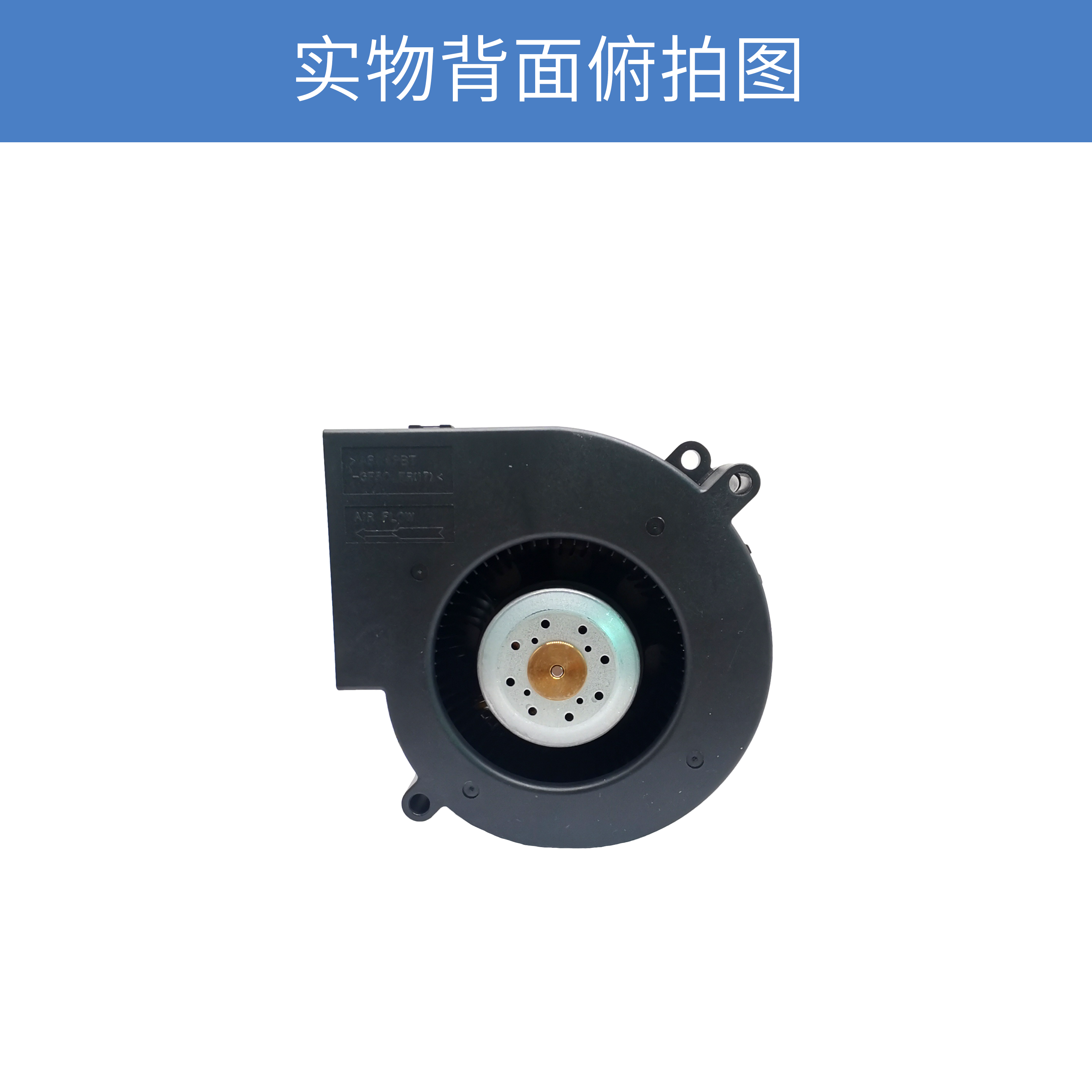
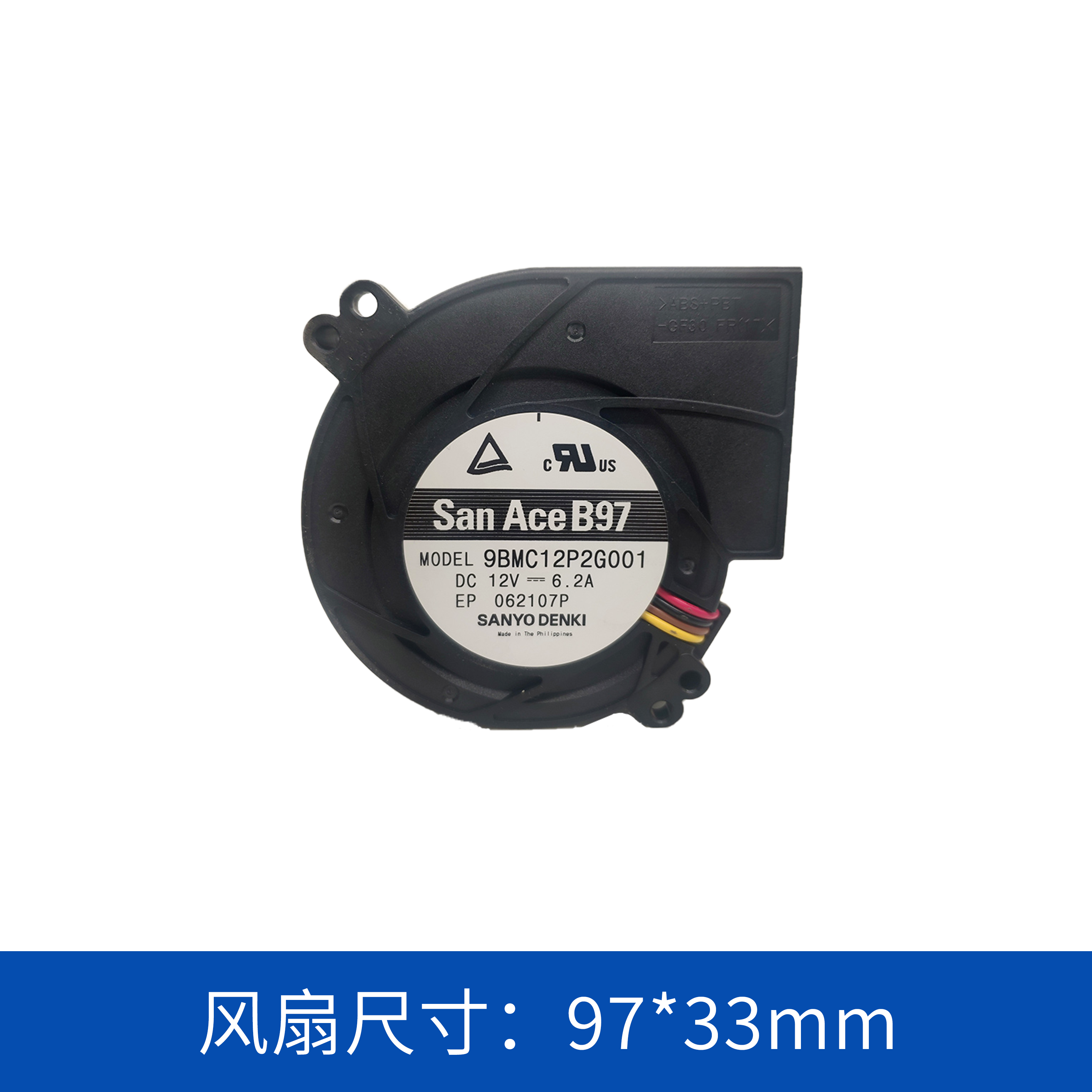
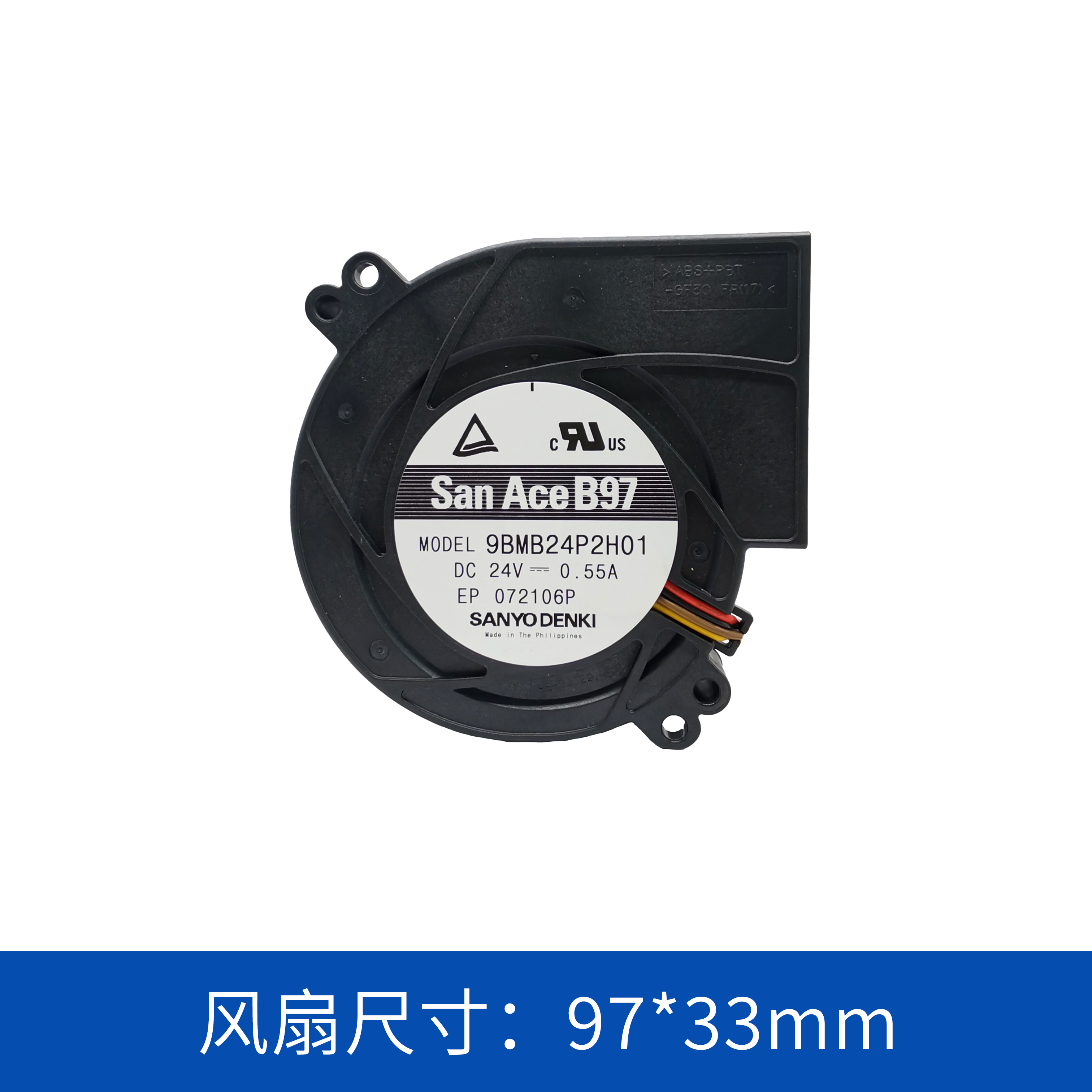
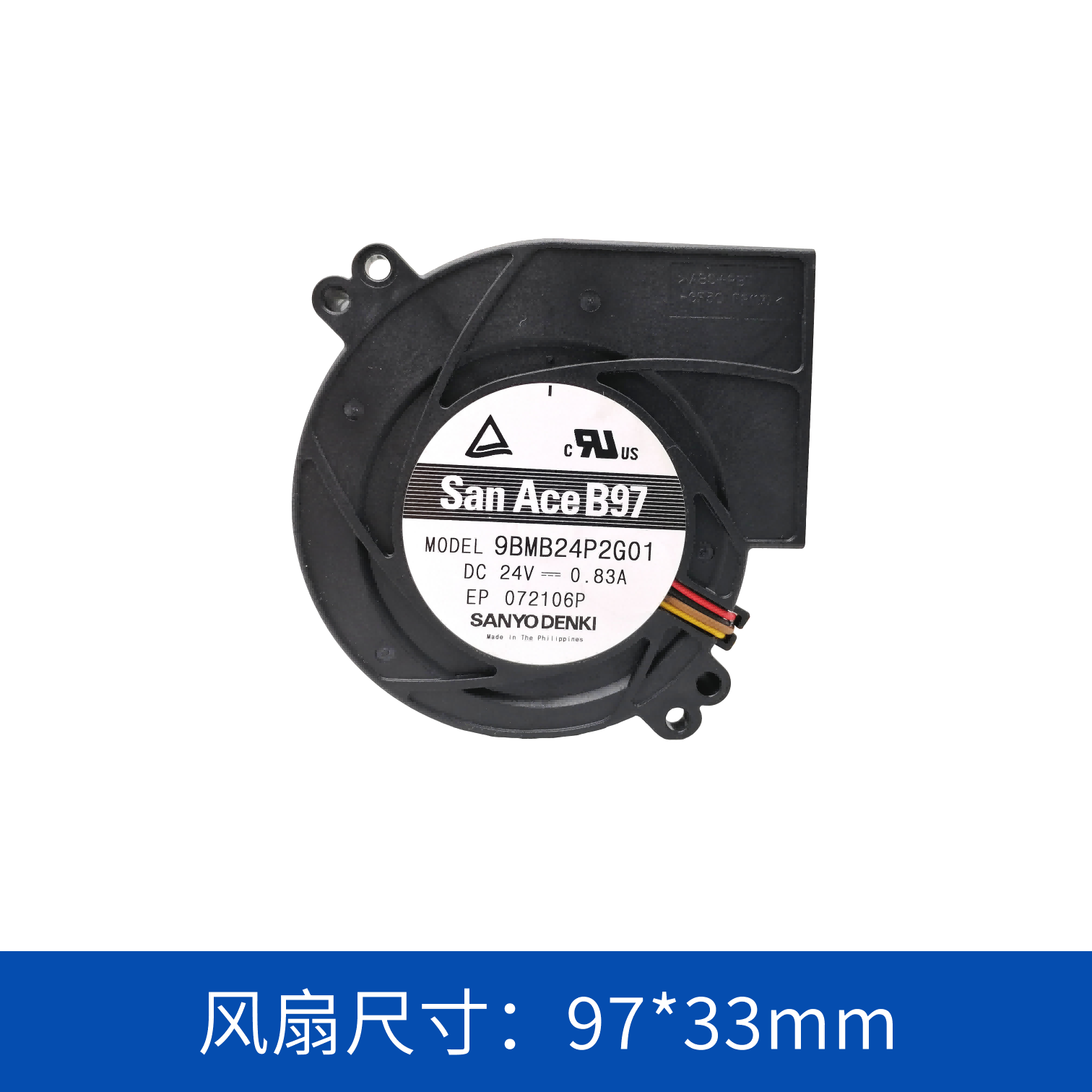
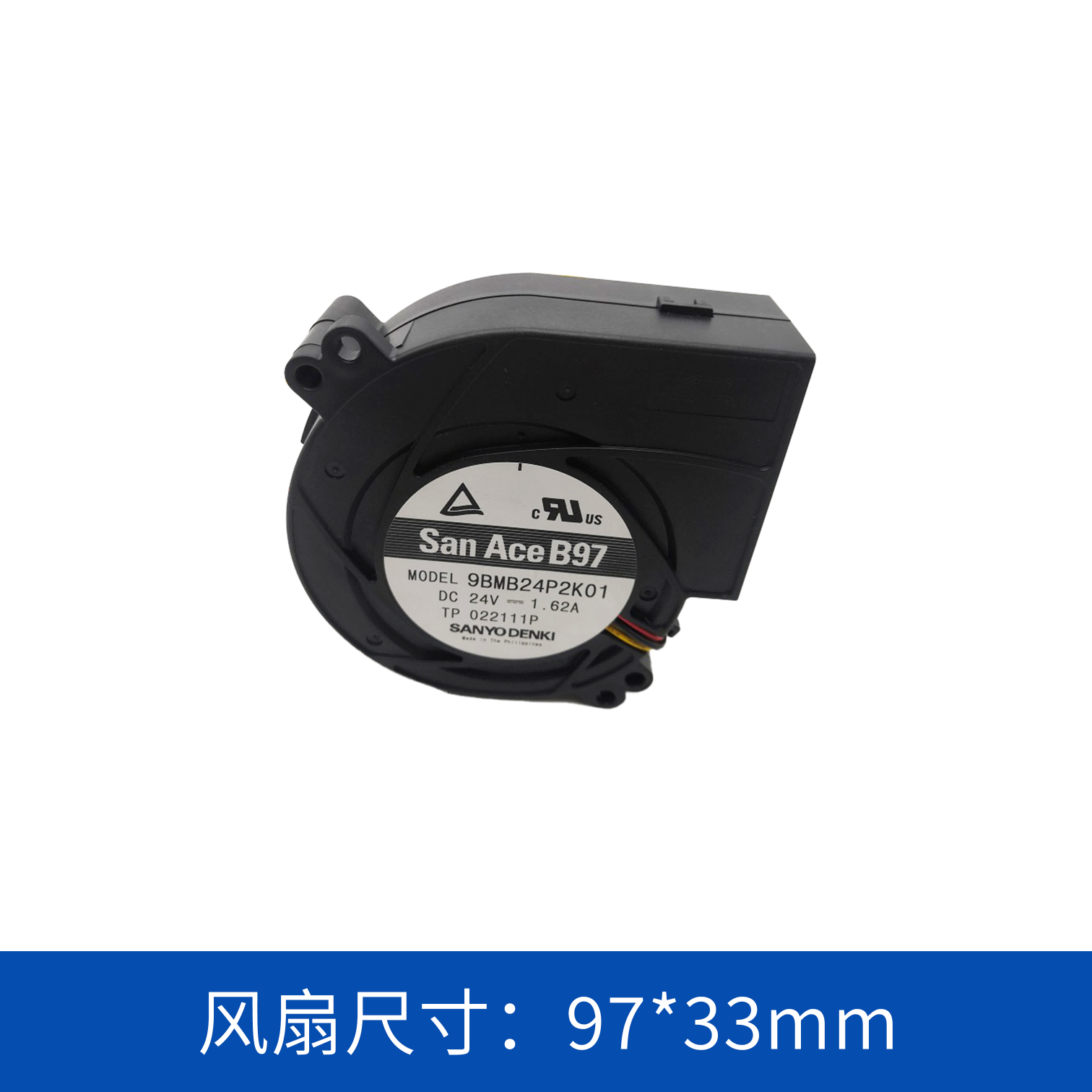
The SANYO DENKI San Ace 9BMB24P2F01 is a compact DC blower designed for this type of cooling environment. With a 97×97×33mm form factor, 24V DC input, 410Pa maximum static pressure and 1.04m³/min maximum airflow, it provides a combination of airflow and pressure performance for compact electronic systems.
1. 97×33mm Blower for Space-Constrained Equipment
The 9BMB24P2F01 belongs to the San Ace DC blower lineup and uses a compact 97mm × 97mm × 33mm form factor.
The 33mm thickness is particularly relevant when equipment designers need to control the overall depth of an enclosure.
Unlike a standard axial fan, a blower can redirect the airflow through its outlet. This can make it easier to create a practical airflow route inside equipment where the intake and exhaust directions cannot be arranged along a single straight axis.
For compact equipment, the mechanical advantages of the blower configuration can be just as important as its airflow specification.
2. 24V DC Operation and 10.8W Rated Power
The San Ace 9BMB24P2F01 is designed for a 24V DC power supply.
Its rated electrical parameters are:
|
Specification
|
9BMB24P2F01
|
|
Product type
|
DC Blower
|
|
Brand
|
SANYO DENKI / San Ace
|
|
Dimensions
|
97 × 97 × 33mm
|
|
Rated voltage
|
24V DC
|
|
Rated current
|
0.45A
|
|
Rated power
|
10.8W
|
|
Rated speed
|
4,500min⁻¹
|
|
Maximum airflow
|
1.04m³/min
|
|
Maximum airflow
|
36.7CFM
|
|
Maximum static pressure
|
410Pa
|
|
Maximum static pressure
|
1.64inchH₂O
|
|
Noise
|
56dBA
|
|
Sensor
|
Pulse sensor
|
|
PWM control
|
Yes
|
|
Expected life
|
40,000h at 60°C / 70,000h at 40°C
|
The 24V configuration is suitable for equipment that already uses a 24V auxiliary power architecture, which is common in industrial and electronic systems.
3. 1.04m³/min Airflow for Forced Cooling
The maximum airflow of the 9BMB24P2F01 is:
1.04m³/min (36.7CFM)
Airflow represents the blower's ability to move air, but the maximum free-air airflow should not be interpreted as the actual airflow after installation.
Once the blower is installed inside equipment, airflow resistance from the cooling structure will affect the final operating point.
For this reason, engineers should evaluate the airflow together with static pressure and the system resistance curve.
This is especially important when the cooling path contains:
-
Heat sinks
-
Air filters
-
Protective grilles
-
Narrow vents
-
Internal ducts
-
Dense PCB layouts
-
Power modules
4. 410Pa Maximum Static Pressure
The maximum static pressure of the 9BMB24P2F01 is:
410Pa / 1.64inchH₂O
This specification makes the blower suitable for cooling systems where airflow has to overcome a certain level of resistance.
For example, if an equipment enclosure has a relatively restrictive air passage, the actual airflow from a fan with a high free-air CFM rating may be considerably lower than expected.
A blower should therefore be evaluated based on its pressure-flow relationship, rather than maximum CFM alone.
The actual operating point occurs where the blower performance curve intersects the system resistance curve.
5. 4,500min⁻¹ Rated Speed
The rated speed of the 9BMB24P2F01 is 4,500min⁻¹.
This operating speed allows the compact blower to generate sufficient airflow and pressure while maintaining a relatively small installation footprint.
For engineers designing compact equipment, rotational speed should be considered together with:
-
Airflow
-
Static pressure
-
Noise
-
Power consumption
-
Thermal load
-
Required operating life
A suitable balance between these parameters is generally more useful than simply choosing the highest-speed model available.
6. PWM Speed Control for Variable Cooling Demand
The 9BMB24P2F01 supports PWM control.
PWM control provides the equipment controller with a way to adjust blower speed according to actual cooling requirements.
For example, when the equipment is operating at a low processing load, the blower can run at a lower speed. When temperature or power consumption increases, the controller can increase the cooling capacity.
This type of control can be useful for equipment with highly variable operating conditions.
A temperature sensor can be incorporated into the control system so that blower speed responds to actual thermal conditions rather than operating continuously at maximum speed.
7. Pulse Sensor for Operation Monitoring
The 9BMB24P2F01 is equipped with a pulse sensor.
The pulse signal can be used by the equipment controller to monitor blower operation.
This provides useful information for systems where cooling performance is closely related to equipment reliability.
If the detected rotational signal changes abnormally, the control system can potentially trigger an alarm or initiate a protective response.
For unattended or continuously operating equipment, fan monitoring can therefore form part of the overall thermal protection strategy.
8. 56dBA Noise Specification
The specified noise level of the 9BMB24P2F01 is 56dBA.
Actual system noise depends not only on the blower itself but also on the enclosure, mounting structure and airflow path.
For example, sharp bends, narrow openings and poorly designed air outlets can introduce additional airflow noise.
Consequently, acoustic optimization should be performed at the equipment level.
A blower with appropriate operating speed and PWM control can also provide additional flexibility for balancing cooling requirements against acoustic performance.
9. Expected Service Life up to 70,000 Hours at 40°C
The specified expected life of the 9BMB24P2F01 is:
40,000 hours at 60°C
and
70,000 hours at 40°C.
Temperature has a direct influence on the operating environment of a cooling fan.
When designing equipment for long-term operation, engineers should consider the temperature around the blower rather than only the ambient temperature outside the enclosure.
Good airflow organization can help prevent hot air from recirculating around the blower and other temperature-sensitive components.
10. Potential Applications of the 9BMB24P2F01
The combination of compact dimensions, 24V operation, PWM control and pulse sensing makes this San Ace blower suitable for a range of electronic and industrial cooling applications.
Server and Communication Equipment
High-density electronic equipment often has limited internal space and multiple airflow restrictions.
A blower can be considered when the cooling system needs a redirected airflow path and sufficient pressure to move air through internal structures.
Industrial Control Systems
Industrial control equipment may contain processors, power supplies, drives and other heat-generating components within a relatively compact enclosure.
The 24V DC configuration makes the blower suitable for systems using industrial DC power architectures.
Power Electronics
Power converters and other electronic power equipment can create concentrated thermal loads.
A blower can help direct cooling air toward specific thermal zones rather than relying entirely on general enclosure ventilation.
Compact Electronic Equipment
For small electronic devices where the fan installation depth and airflow direction are both restricted, the 97×97×33mm blower format provides additional mechanical design flexibility.
11. Blower or Axial Fan: Which Airflow Structure Is More Suitable?
The choice between an axial fan and a blower depends heavily on the equipment's internal airflow architecture.
An axial fan generally works well when the airflow can travel directly through the equipment:
Air intake → Axial fan → Heat source → Exhaust
A blower provides a different configuration:
Air intake → Blower → 90° redirected airflow → Heat source → Exhaust
This change in airflow direction can simplify mechanical layouts where the available space does not permit a straight-through fan arrangement.
For this reason, blower selection should be considered early in the equipment design stage rather than treated only as a replacement for an axial fan.
12. How to Evaluate the 9BMB24P2F01 in a Real Cooling System
Before selecting the blower, engineers should establish the actual cooling requirements.
Step 1 — Calculate the heat load
Determine the approximate heat generated by processors, power modules, converters and other major heat sources.
Step 2 — Determine the required airflow
Estimate the airflow required to maintain the target component temperature.
Step 3 — Analyze system resistance
Calculate or measure pressure losses from heat sinks, filters, grilles, ducts and ventilation openings.
Step 4 — Check the P-Q curve
Use the blower's performance curve to identify the expected operating point.
Step 5 — Verify electrical compatibility
Confirm that the equipment supports:
24V DC / 0.45A / 10.8W
Step 6 — Evaluate control requirements
If the equipment requires variable-speed cooling, verify the PWM control interface.
Step 7 — Consider monitoring
The pulse sensor can be integrated into the host controller for rotational-speed monitoring.
13. A Balanced Cooling Option for 24V Compact Systems
The SANYO DENKI San Ace 9BMB24P2F01 combines a compact 97×97×33mm structure with 24V DC operation, 1.04m³/min airflow, 410Pa static pressure, 4,500min⁻¹ rated speed and 56dBA noise.
Its PWM control and pulse-sensor functions also allow the blower to become part of a more intelligent cooling system rather than operating simply as an independent fixed-speed fan.
For equipment with limited installation space and moderate airflow resistance, the 9BMB24P2F01 can be evaluated as a cooling option for servers, communication equipment, industrial control systems, power electronics and other compact electronic devices.
The key to successful selection is to evaluate airflow, static pressure, system impedance, temperature, noise and control requirements as a complete system.
 ∷
∷






 Click to inquire