欢迎光临~山洋散热风扇中国区产品链
语言选择:
 ∷
∷

∷
 ∷
∷

The kidneys perform an essential filtering function in the human body.
When kidney function fails, dialysis equipment helps remove metabolic waste and excess fluid from the blood, supporting the body in maintaining a stable internal environment.
A similar “filtering logic” can be found in a completely different system.
Electronic equipment continuously generates heat during operation, and that heat also needs to be removed efficiently.
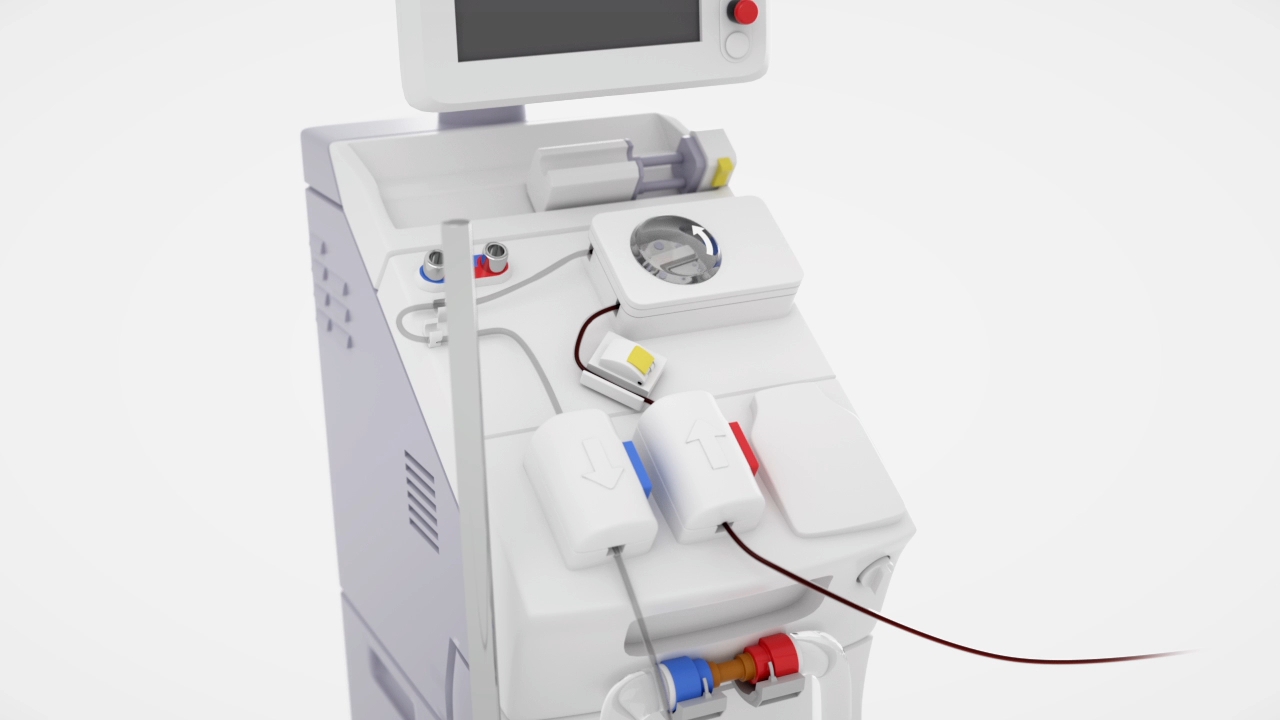
In dialysis-related medical equipment, in addition to sophisticated medical functions, there are electronic components such as control circuits, power supplies, and PCBs. These components generate heat during continuous operation. If the heat cannot be dissipated properly, the internal temperature of the equipment may rise.
This is where a San Ace DC Cooling Fan can play an important role in thermal management.
The two systems are completely different in nature, but their basic logic can be compared in a simple way:
| Human Body | Electronic Equipment |
|---|---|
| Kidney | Thermal management system |
| Blood circulation | Internal airflow circulation |
| Metabolic waste | Heat generated by electronic components |
| Dialysis removes waste | DC Cooling Fan removes heat |
| Maintaining internal balance | Maintaining an appropriate internal temperature |
| Continuous operation | Continuous and reliable cooling |
Of course, a cooling fan does not literally “filter” heat in the medical sense.
Here, “filtering heat” is simply a visual way of describing the process: the fan continuously moves air through the equipment and carries accumulated heat away from heat-generating components.
The underlying question is straightforward:
When heat is generated, can it be removed quickly and reliably?
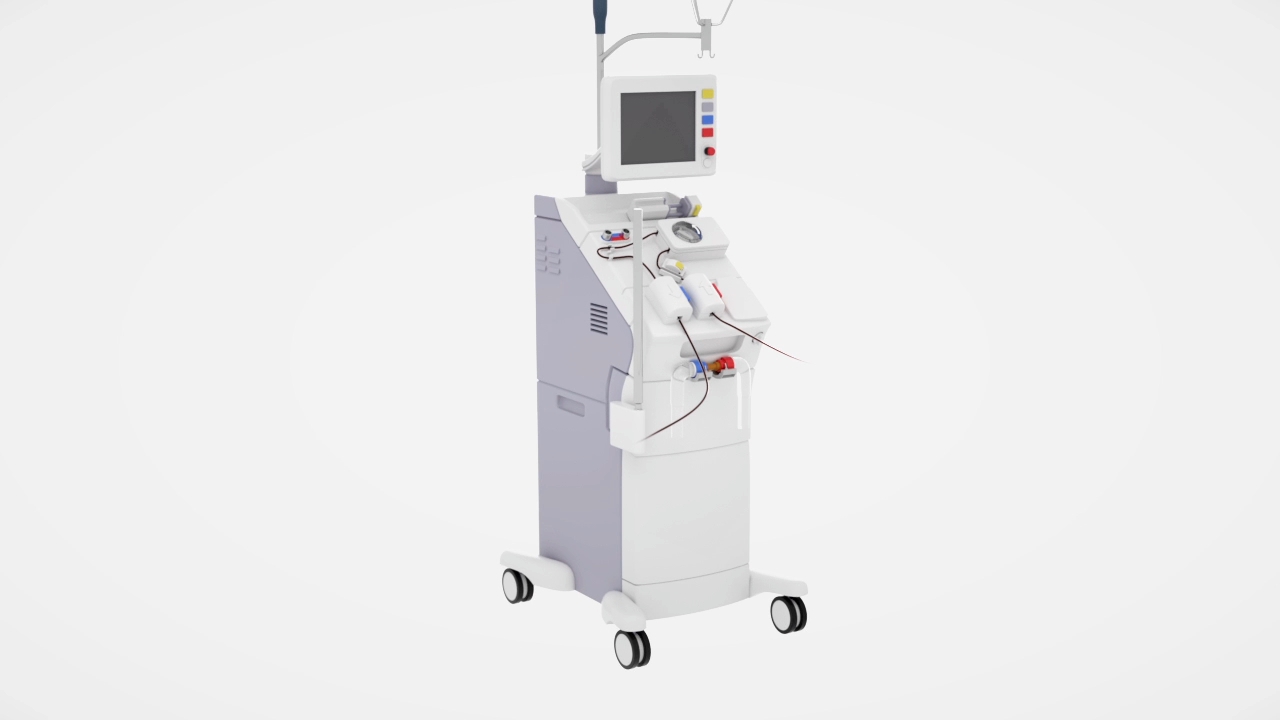
Dialysis-related equipment is precision medical equipment.
Its internal structure may contain various electronic, electrical, and control components. During continuous operation, these components generate heat.
As equipment becomes more compact and integrated, thermal management can become increasingly challenging.
More compact structure → More restricted airflow → Greater potential for heat accumulation
Natural convection alone may not be sufficient for managing the heat generated inside compact electronic equipment.
Forced airflow using a cooling fan is therefore widely used as a method of thermal management.
San Ace DC Cooling Fans are designed to address this type of cooling requirement.
This is one of the most common misunderstandings in cooling fan selection.
When engineers look at fan specifications, one of the first questions is often:
“How much airflow does this fan provide?”
However, cooling performance in actual equipment depends on more than airflow alone.
Other factors also need to be considered:
✔ Static pressure
✔ Power consumption
✔ Noise
✔ Vibration
✔ Expected life
✔ Available installation space
✔ System impedance
✔ Control requirements
✔ Fan monitoring requirements
For example, narrow air passages, filters, heat sinks, and other internal structures can create airflow resistance.
A fan with high free-air airflow does not necessarily maintain the same airflow once it is installed in an actual system.
Therefore:
Free-air airflow ≠ Actual system airflow.
This is why San Ace DC Fans are developed by comprehensively considering factors such as impeller shape, motor characteristics, operating airflow, and expected life.
One of the key characteristics of San Ace DC Fans is their combination of:
Higher airflow means that more air can pass through heat-generating areas within a given period of time, helping carry heat away from electronic components.
When airflow encounters resistance inside equipment, the fan needs sufficient static pressure to maintain effective airflow.
The two can be understood simply as:
High airflow = How much air can be moved
High static pressure = How effectively the airflow can be maintained against resistance
For compact equipment with complex internal structures, considering only one of these parameters is often not enough.
A cooling fan is itself a powered component within an electronic system.
Therefore, while sufficient cooling performance is essential, reducing the fan's own power consumption can also contribute to overall system efficiency.
San Ace DC Fans focus not only on:
High airflow and high static pressure
but also on:
Low power consumption and low vibration.
Low vibration can be particularly important in precision equipment.
Because a fan contains rotating components, its operating condition can influence the mechanical environment of the equipment.
For this reason, comprehensive optimization of the impeller, motor, and overall operating characteristics is important during fan development.

The requirements for modern cooling fans go beyond simply:
“Make sure the fan is rotating.”
When equipment needs to operate continuously, engineers may also need to know:
What is the current fan speed?
Has the fan stopped rotating?
Has the fan speed dropped abnormally?
This is where sensing and control functions become important.
San Ace DC Cooling Fans offer various monitoring and control options, including:
| Function | Purpose |
|---|---|
| FG Pulse Sensor | Detects fan speed |
| Locked-Rotor Sensor | Detects when fan rotation stops |
| Low-Speed Sensor | Detects when fan speed falls below a specified level |
| PWM Control | Enables remote control of fan speed |
This allows cooling systems to move beyond simple “active cooling” toward a more controllable approach:
Cooling + Monitoring + Control
Equipment does not necessarily require maximum airflow at all times.
For example, the heat generated by electronic components can vary depending on the operating condition.
If the fan continuously operates at maximum speed, it may result in unnecessary:
❌ Power consumption
❌ Noise
❌ Fan operating load
With PWM control, the fan speed can be adjusted according to the thermal requirements of the equipment.
In simple terms:
Lower thermal load → Maximum fan speed may not be necessary
Higher thermal load → Fan speed can be increased
This is one of the important ways modern cooling systems can move from fixed-speed cooling toward more adaptive thermal management.
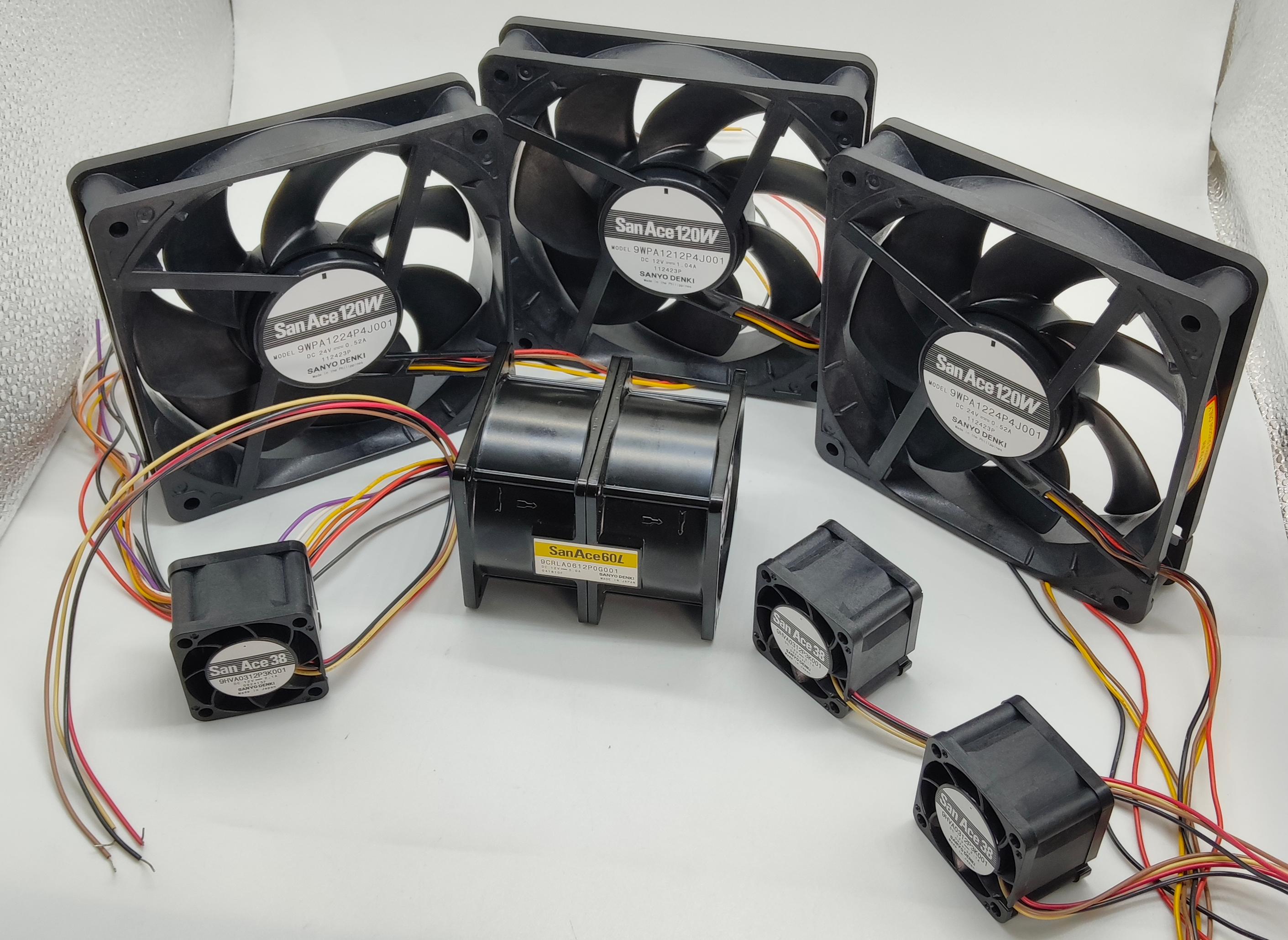
Different medical devices have different internal structures and cooling requirements.SANYO DENKI San Ace DC Cooling Fans are not limited to a single product type. A broad range of product lines is available to meet different application requirements.
| Product Line | Main Application Focus |
|---|---|
| DC Fan | General DC cooling requirements |
| Low Power Consumption Fan | Applications requiring reduced power consumption |
| Silent Fan | Equipment where low noise is important |
| Splash Proof Fan | Applications requiring splash resistance |
| Oil Proof Fan | Applications exposed to specific oil environments |
| Long Life Fan | Equipment requiring extended operating life |
| Counter Rotating Fan | Applications requiring specialized airflow performance |
| Blower | Space-constrained or directional airflow applications |
San Ace DC Cooling Fans are available in more than 80 frame sizes, with a variety of airflow and static pressure characteristics.
This makes it possible to consider different combinations of size, performance, and functionality when selecting a fan for a specific equipment design.
This is another important point in thermal design.
If a piece of equipment has a fixed fan mounting space, simply finding a fan with the same dimensions may seem like the easiest approach.
However, a more comprehensive selection process should consider:
① Determine the equipment's heat generation
↓
② Define the target temperature rise
↓
③ Analyze the internal airflow path
↓
④ Evaluate system airflow resistance
↓
⑤ Determine the required airflow and static pressure
↓
⑥ Select an appropriate fan size
↓
⑦ Consider noise, power consumption, life, and other performance requirements
↓
⑧ Select PWM, FG, locked-rotor, low-speed detection, and other functions according to system requirements
Fan dimensions are only the starting point—not the end point—of fan selection.
San Ace offers more than individual cooling fans.
In addition to a wide range of DC Cooling Fans, San Ace can also provide fan units manufactured according to equipment specifications and application requirements.
Various fan protection and accessory options are also available:
| Option | Purpose |
|---|---|
| Finger Guard | Helps prevent fingers from contacting rotating blades |
| Resin Filter Kit | Helps reduce dust entering the equipment |
| EMC Guard | Provides protection for applications involving electromagnetic noise |
From individual fans to fan units and supporting protection options, different solutions can be combined according to the requirements of the equipment.
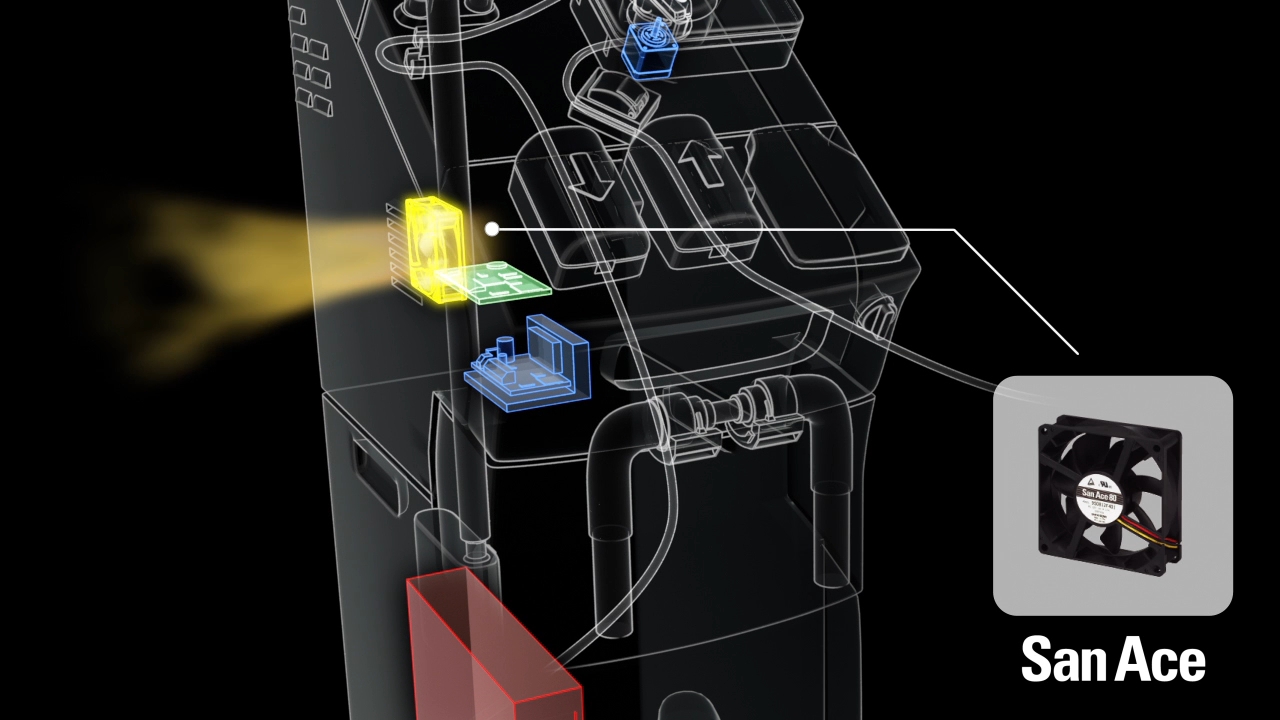
Let's return to the idea at the beginning of this article.
The kidney performs filtration and regulation functions within the human body, while a thermal management system manages heat inside electronic equipment.
Although these are completely different fields, they share a basic concept:
For a system to operate continuously and reliably, the “burdens” generated within the system need to be managed effectively.
For the human body, this means metabolic waste.
For electronic equipment, it means the heat generated during operation.
The role of a San Ace DC Cooling Fan is therefore not simply:
“Make the fan rotate.”
It is about creating a stable and controllable airflow environment through technologies and functions such as:
High airflow + High static pressure + Low power consumption + Low vibration
combined with:
PWM control + FG speed sensing + Locked-rotor detection + Low-speed detection.
From servers and ICT equipment to medical devices, electronic systems are increasingly designed with:
More compact structures, higher integration, and greater demands for thermal management.
As a result, a cooling fan is no longer simply a component that “spins.”
It needs to be matched with the equipment's thermal design, airflow path, control system, installation space, and operating environment.
With technologies accumulated through long-term fan development, San Ace DC Cooling Fans provide a wide range of cooling options covering airflow, static pressure, power consumption, vibration, monitoring, and control functions.
When equipment continuously generates heat, the cooling system needs to continuously manage it.
The key to an effective cooling system is simple:
Give generated heat a path out—and make the required cooling stable and controllable.
jamicon cooling fan,AVC cooling fan,jentech cooling fan,AVC fan
联系人:吴工
手机:18148574796
电话:0755-23706799
邮箱:wmc@jentech.cn
地址: 深圳市龙华区观澜街道库坑社区同富裕工业区28号华朗嘉工业园1栋6楼
 点击咨询
点击咨询