SANYO DENKI San Ace 9BMB12P2S01: 12V 97×33 mm Blower Cooling Fan for Compact Electronic Equipment
As electronic equipment becomes increasingly compact, thermal management has become more dependent on how efficiently air can be moved through restricted internal spaces.
Servers, storage systems, communication equipment, industrial controllers, and other electronic devices often combine high component density with limited installation space. Heat sinks, ventilation grilles, filters, narrow air channels, and densely arranged components can all increase airflow resistance.
In these applications, the cooling fan needs to provide not only sufficient airflow, but also enough static pressure to maintain useful airflow through the system.
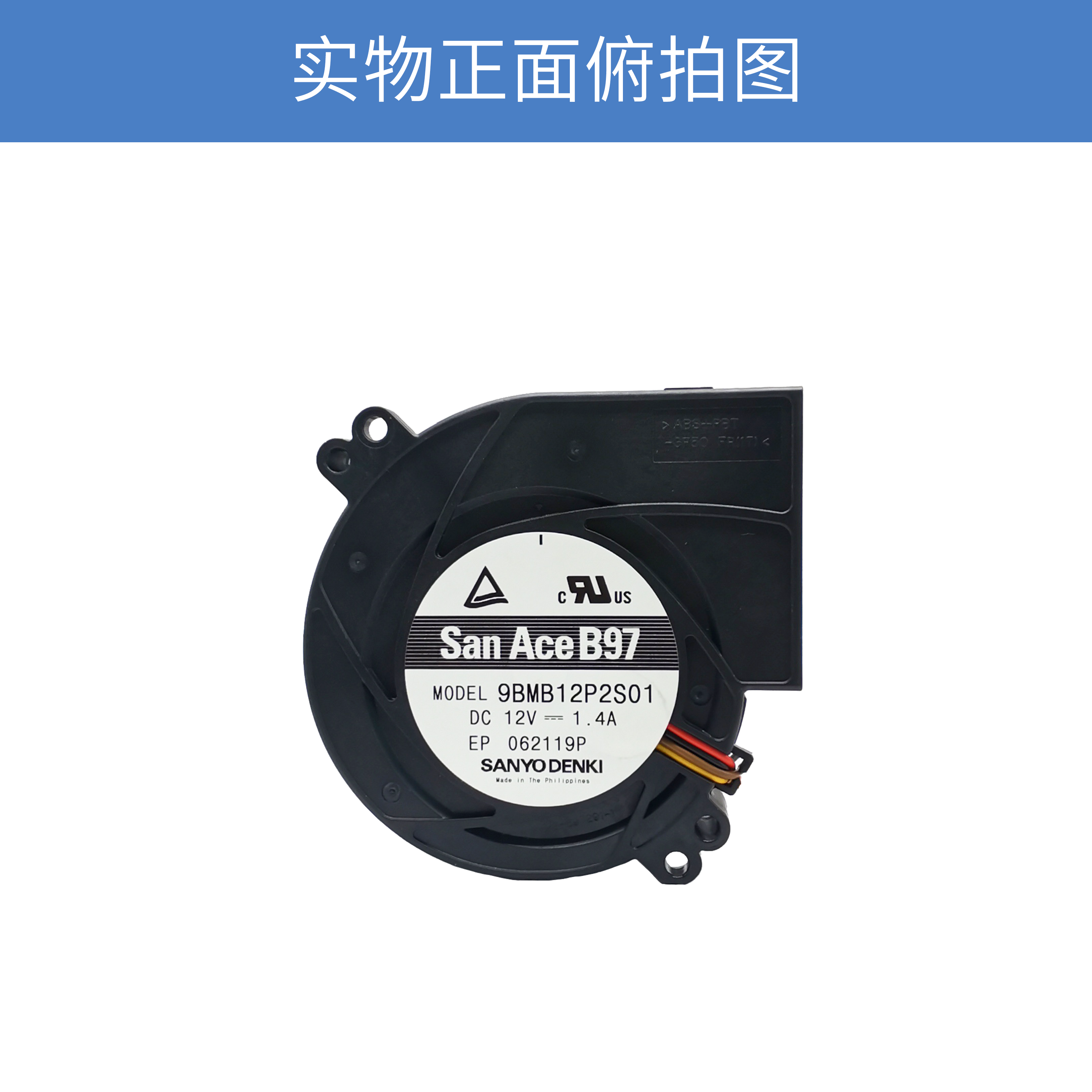
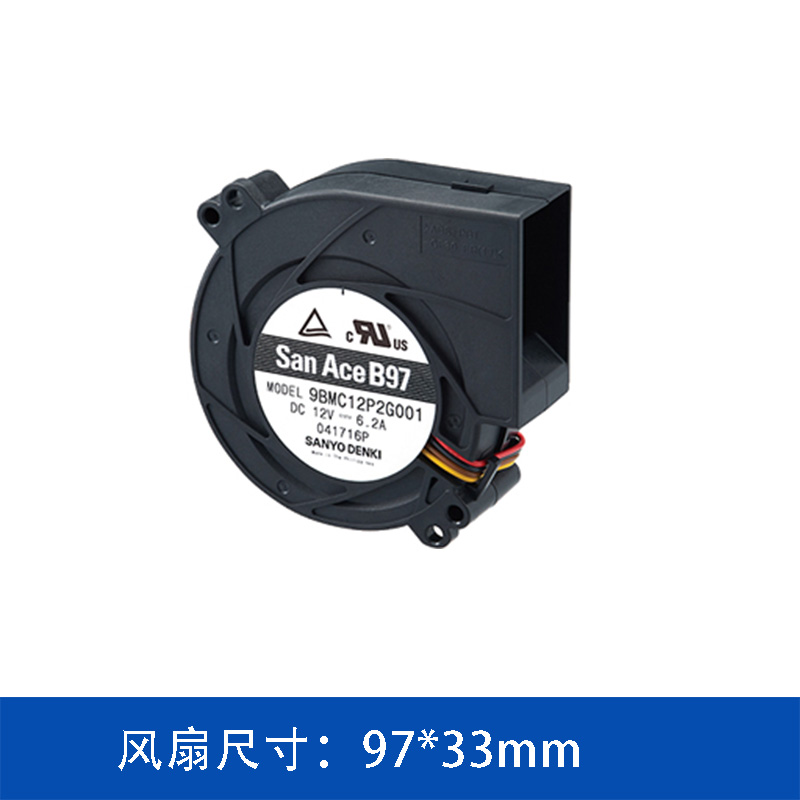
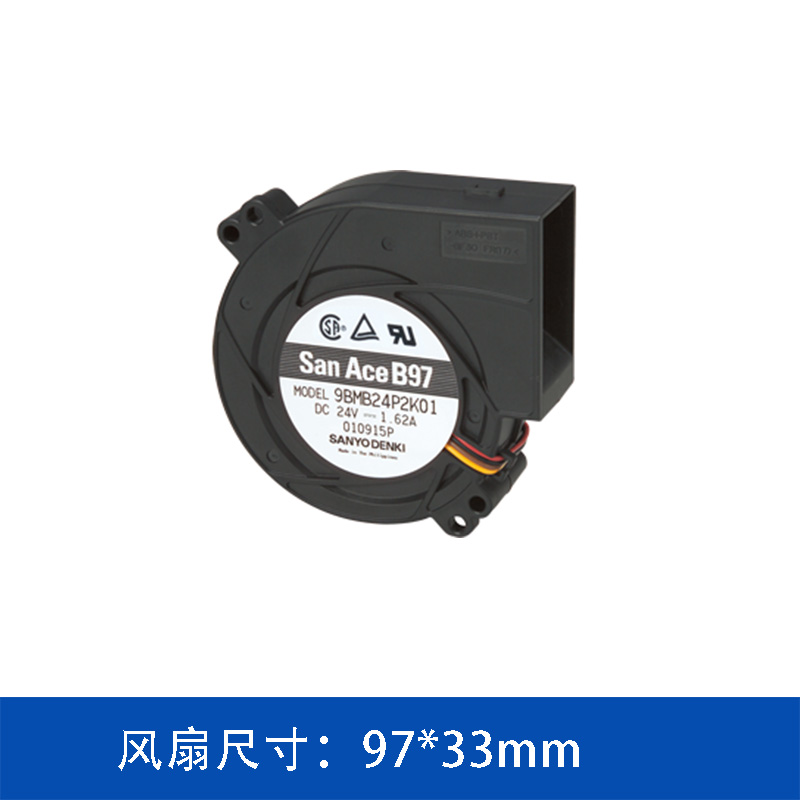
The SANYO DENKI San Ace 9BMB12P2S01 is a 12V DC blower cooling fan featuring a compact 97×33 mm design. It provides a balance of airflow, static pressure, power consumption, compact installation, and controllable operation for electronic equipment cooling.
Compact 97×33 mm Blower Design
The 9BMB12P2S01 measures 97 mm × 33 mm, placing it within the compact 9733 blower category.
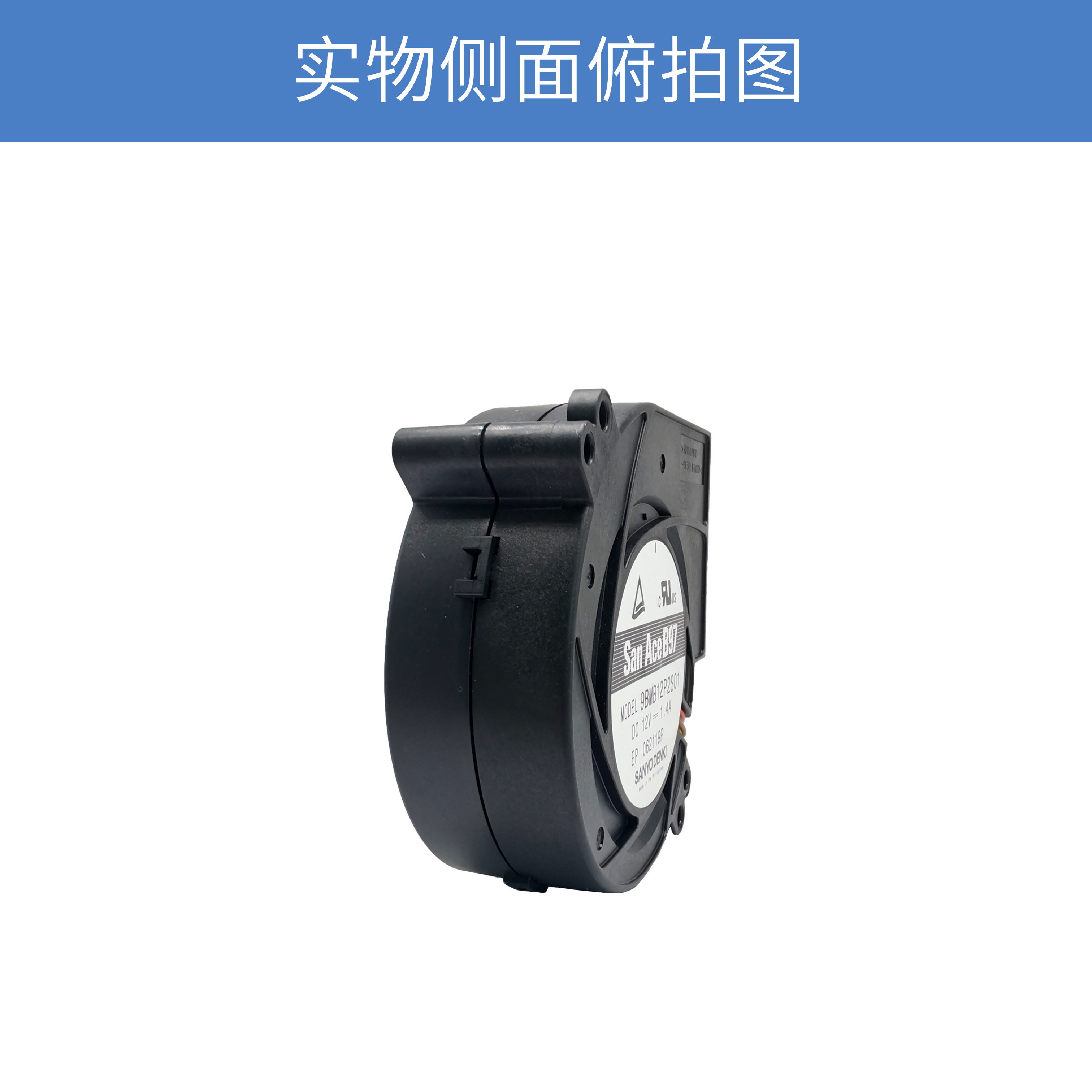
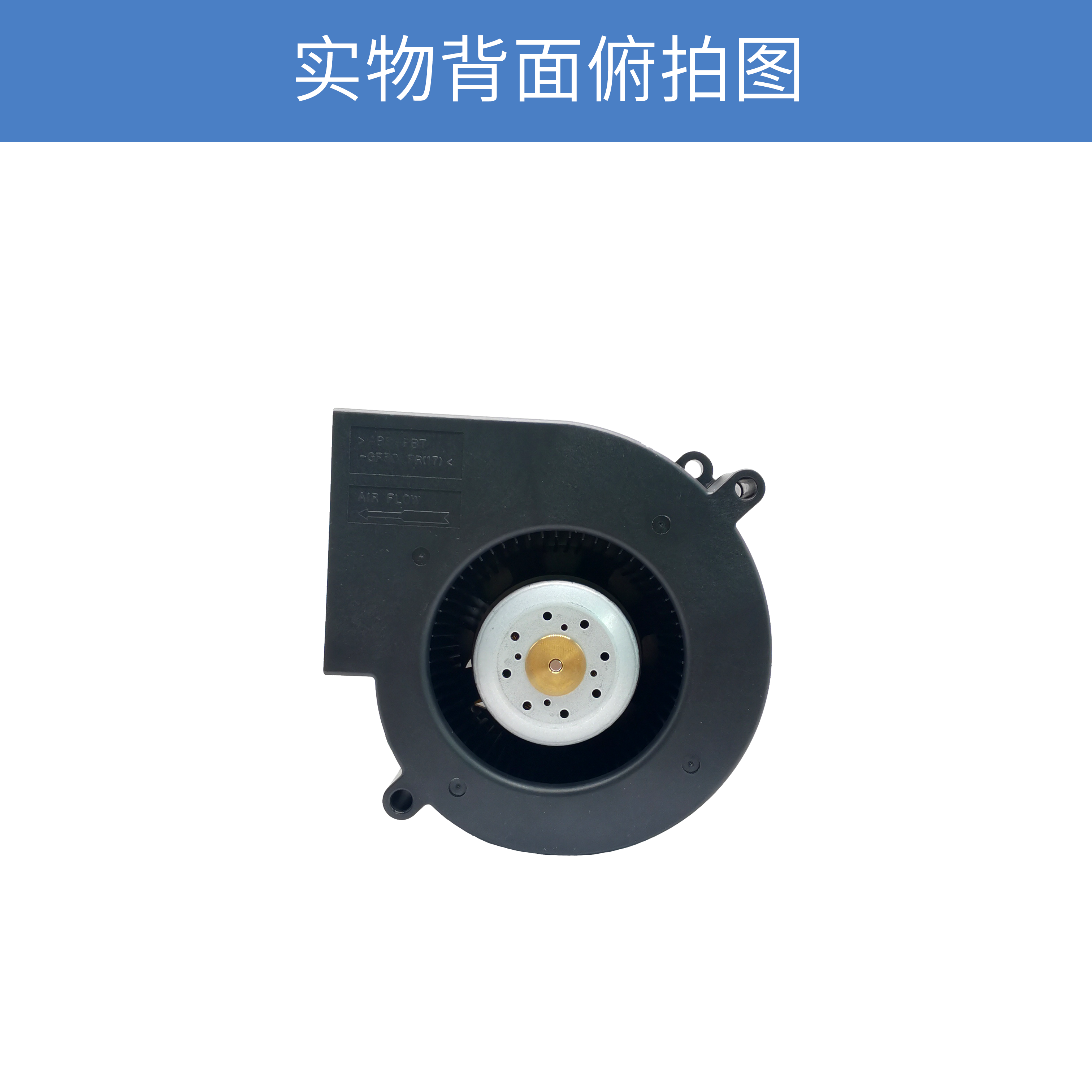
Unlike a conventional axial cooling fan, a blower changes the direction of airflow within the fan structure. Air enters through the intake and is discharged approximately 90 degrees from the intake direction.
This airflow configuration can provide greater flexibility when designing compact electronic equipment.
For example, engineers can arrange the blower so that the discharged air is directed toward a heat sink or ventilation channel without necessarily using an additional external duct to change the airflow direction.
This can be useful in applications where internal space is limited and airflow routing is an important part of the mechanical design.
610 Pa Maximum Static Pressure
The San Ace 9BMB12P2S01 provides a maximum static pressure of 610 Pa, or approximately 2.45 inchH₂O.
Static pressure is particularly important when a cooling fan is installed in an airflow system with significant resistance.
In an actual device, the air path may contain:
-
Heat sinks
-
Filters
-
Protective grilles
-
Narrow ventilation channels
-
Dense electronic components
-
Internal ducts
-
Multiple airflow restrictions
Each of these elements can increase system impedance.
As system resistance increases, the actual airflow delivered by the fan decreases. Therefore, maximum airflow under free-air conditions should not be used as the only criterion for selecting a cooling fan.
The actual operating point should be determined by considering the relationship between the fan performance curve and the system resistance curve.
With a maximum static pressure of 610 Pa, the 9BMB12P2S01 can be considered for compact electronic equipment where airflow resistance needs to be taken into account.
43.1 CFM Maximum Airflow
The 9BMB12P2S01 provides a maximum airflow of:
This airflow capacity provides forced-air cooling for compact electronic equipment with moderate heat generation.
However, the maximum airflow specification represents the fan's performance under free-air conditions. Actual airflow after installation will depend on the resistance of the equipment's complete ventilation system.
For this reason, cooling fan selection should follow a system-level approach:
Heat generation → cooling requirement → required airflow → system impedance → fan operating point
This method provides a more realistic assessment of whether a cooling fan can deliver sufficient airflow under actual operating conditions.
12V DC Operation and 16.8 W Rated Power
The San Ace 9BMB12P2S01 is designed for a 12V DC power supply.
Its main specifications are:
|
Parameter
|
Specification
|
|
Model
|
9BMB12P2S01
|
|
Product Type
|
Blower
|
|
Size
|
97 × 33 mm
|
|
Rated Voltage
|
12 V DC
|
|
Rated Current
|
1.4 A
|
|
Rated Power
|
16.8 W
|
|
Rated Speed
|
5,250 min⁻¹
|
|
Maximum Airflow
|
1.22 m³/min / 43.1 CFM
|
|
Maximum Static Pressure
|
610 Pa / 2.45 inchH₂O
|
|
Noise Level
|
59 dBA
|
|
Sensor
|
Pulse sensor
|
|
PWM Control
|
Yes
|
|
Expected Life
|
40,000 h at 60°C / 70,000 h at 40°C
|
With a rated power of 16.8 W, the 9BMB12P2S01 provides a lower-power option within the 97×33 mm San Ace blower lineup.
It can therefore be considered when the equipment requires forced-air cooling and static pressure performance, but does not require the higher power and higher airflow of the more powerful models in the same size class.
PWM Control for Adjustable Cooling
The 9BMB12P2S01 supports PWM control, allowing the equipment controller to adjust the fan speed according to cooling demand.
Electronic equipment does not always generate the same amount of heat.
For example, a communication system may operate under different workloads throughout the day. Industrial equipment may also experience changes in thermal load according to its operating cycle.
A variable-speed cooling strategy can respond to these changes.
Lower thermal load → lower fan speed
Higher thermal load → higher fan speed
PWM control can therefore provide engineers with greater flexibility when balancing cooling performance, fan power consumption, and acoustic requirements.
The actual PWM control strategy should be determined according to the thermal characteristics and control architecture of the target equipment.
Pulse Sensor for Fan Monitoring
The 9BMB12P2S01 is equipped with a pulse sensor.
The pulse signal can be used to monitor fan rotational status and provide feedback to the equipment controller.
This can be useful in systems where fan operation is closely related to equipment reliability.
If the fan stops or its rotational speed changes unexpectedly, the controller can use the pulse signal as part of the system's fault detection or protection strategy.
For continuously operating electronic equipment, this type of monitoring can provide an additional layer of thermal protection.
Expected Service Life at Different Operating Temperatures
The expected service life of the 9BMB12P2S01 is specified as:
-
40,000 hours at 60°C
-
70,000 hours at 40°C
The operating temperature around a cooling fan is an important factor when evaluating long-term reliability.
The temperature inside an electronic enclosure may be significantly higher than the surrounding ambient temperature because of heat generated by processors, power supplies, storage devices, batteries, and other components.
Therefore, engineers should consider the actual fan operating temperature when evaluating service life.
Factors such as fan installation position, airflow direction, enclosure design, component heat generation, and ambient temperature should be included in the thermal design.
Applications of the 9BMB12P2S01
The compact blower structure and 12V DC configuration make the 9BMB12P2S01 suitable for a range of electronic cooling applications.
Server and Storage Equipment
Servers and storage systems typically contain multiple heat-generating components within a limited enclosure.
Heat sinks and restricted ventilation paths can create significant airflow resistance.
The 9BMB12P2S01 provides 43.1 CFM maximum airflow and 610 Pa maximum static pressure, offering a compact solution for systems where airflow must pass through internal resistance.
Communication Equipment
Communication and networking equipment often operates continuously and may have strict requirements for thermal stability.
The compact 97×33 mm blower configuration can provide flexibility for internal airflow design.
PWM control can also allow the cooling capacity to be adjusted according to equipment load.
Industrial Electronics
Industrial controllers, automation equipment, test instruments, and other electronic systems may have limited internal space and complex airflow paths.
A blower can be useful when airflow needs to be redirected by approximately 90 degrees within a compact enclosure.
Compact Electronic Devices
The 9733 form factor can also be considered for other electronic equipment where installation space is limited but forced-air cooling is required.
The combination of 16.8 W rated power, 43.1 CFM maximum airflow, and 610 Pa maximum static pressure provides a balanced option for applications that do not require the highest output available from the 97×33 mm blower lineup.
Why Maximum Airflow Is Not the Only Selection Parameter
When selecting a cooling fan, maximum airflow is often the first specification engineers look at.
However, maximum airflow alone does not indicate how much airflow the fan will actually provide once installed in the equipment.
Consider an enclosure with a restrictive heat sink and narrow ventilation path.
The system resistance may significantly reduce the airflow available from the cooling fan.
This is why static pressure and system impedance need to be evaluated together with airflow.
For the San Ace 9BMB12P2S01:
Maximum airflow: 43.1 CFM
Maximum static pressure: 610 Pa
The actual airflow should be determined from the fan performance curve at the operating point corresponding to the equipment's system resistance.
This approach is particularly important when comparing different blower models within the same 97×33 mm size category.
9BMB12P2S01 Key Specifications
The main characteristics of the SANYO DENKI San Ace 9BMB12P2S01 can be summarized as follows:
-
97×33 mm compact blower
-
12V DC operation
-
16.8 W rated power
-
5,250 min⁻¹ rated speed
-
43.1 CFM maximum airflow
-
610 Pa maximum static pressure
-
59 dBA noise level
-
PWM control
-
Pulse sensor
-
40,000-hour expected life at 60°C
-
70,000-hour expected life at 40°C
These specifications make the model a suitable candidate for compact electronic equipment where controlled forced-air cooling, airflow direction, and moderate static pressure performance are important.
Conclusion
The SANYO DENKI San Ace 9BMB12P2S01 is a 12V DC, 97×33 mm blower cooling fan designed for compact electronic equipment.
With a maximum airflow of 43.1 CFM and maximum static pressure of 610 Pa, the model provides a balanced combination of airflow and pressure performance while maintaining a rated power of 16.8 W.
The PWM control allows the cooling output to be adjusted according to equipment thermal demand, while the pulse sensor enables fan operating status to be monitored by the equipment controller.
For servers, storage systems, communication equipment, industrial electronics, and other compact electronic devices, the 9BMB12P2S01 can be evaluated where limited installation space, airflow resistance, controllable cooling, and long operating life are important design considerations.
As with any cooling fan selection, the final model should be evaluated based on the complete thermal system, including heat generation, required airflow, system impedance, fan operating point, operating temperature, noise requirements, control method, installation space, and expected service life.
 ∷
∷




 Click to inquire